
Last updated August 27, 2026
Free in-home measure and quote - PGT, CGI and CWS impact lines compared on your actual openings, style by style
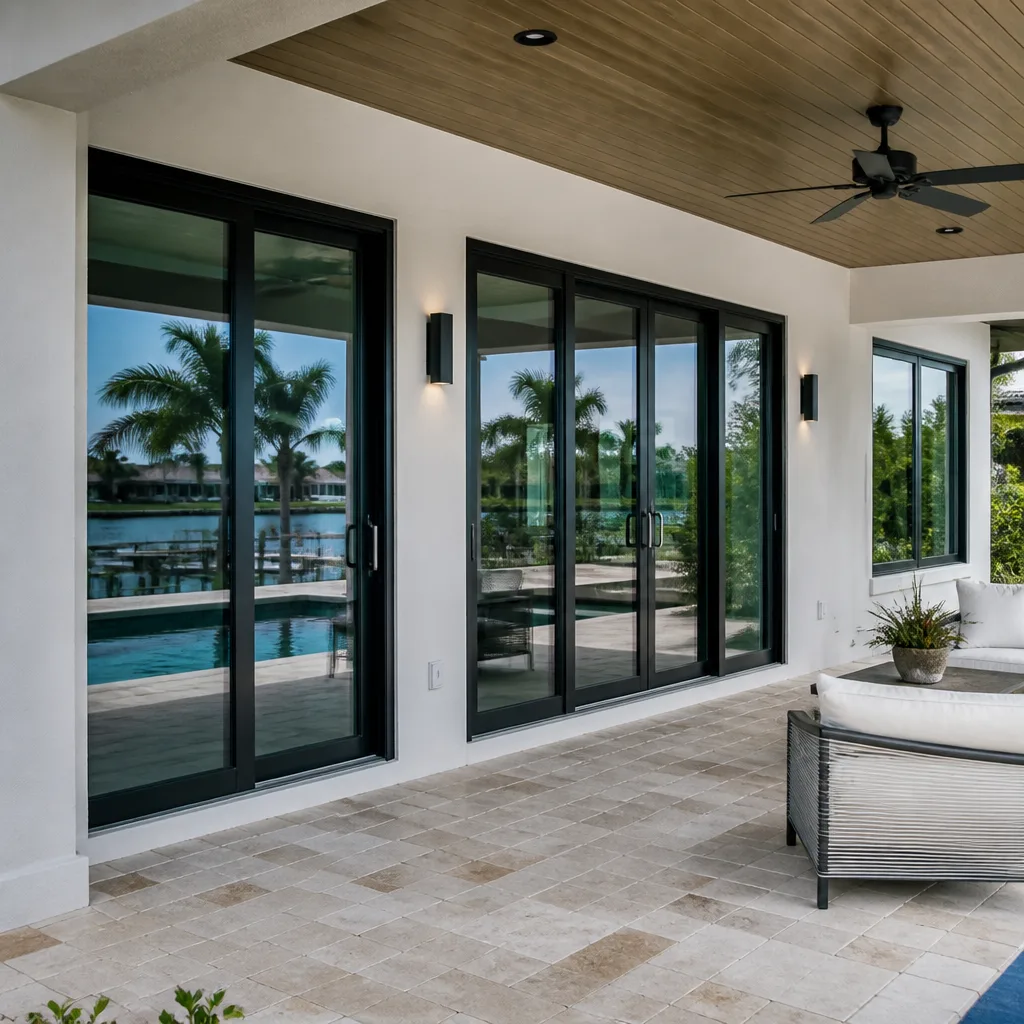
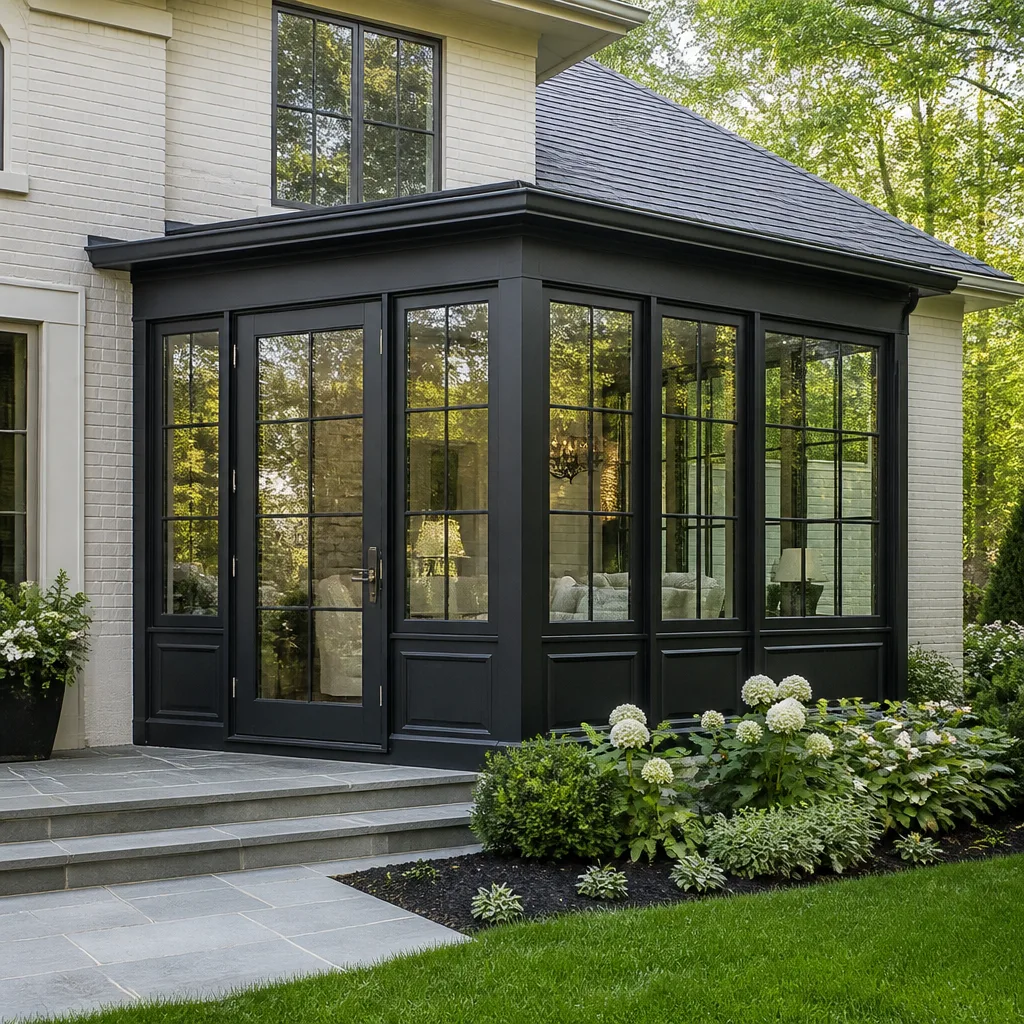
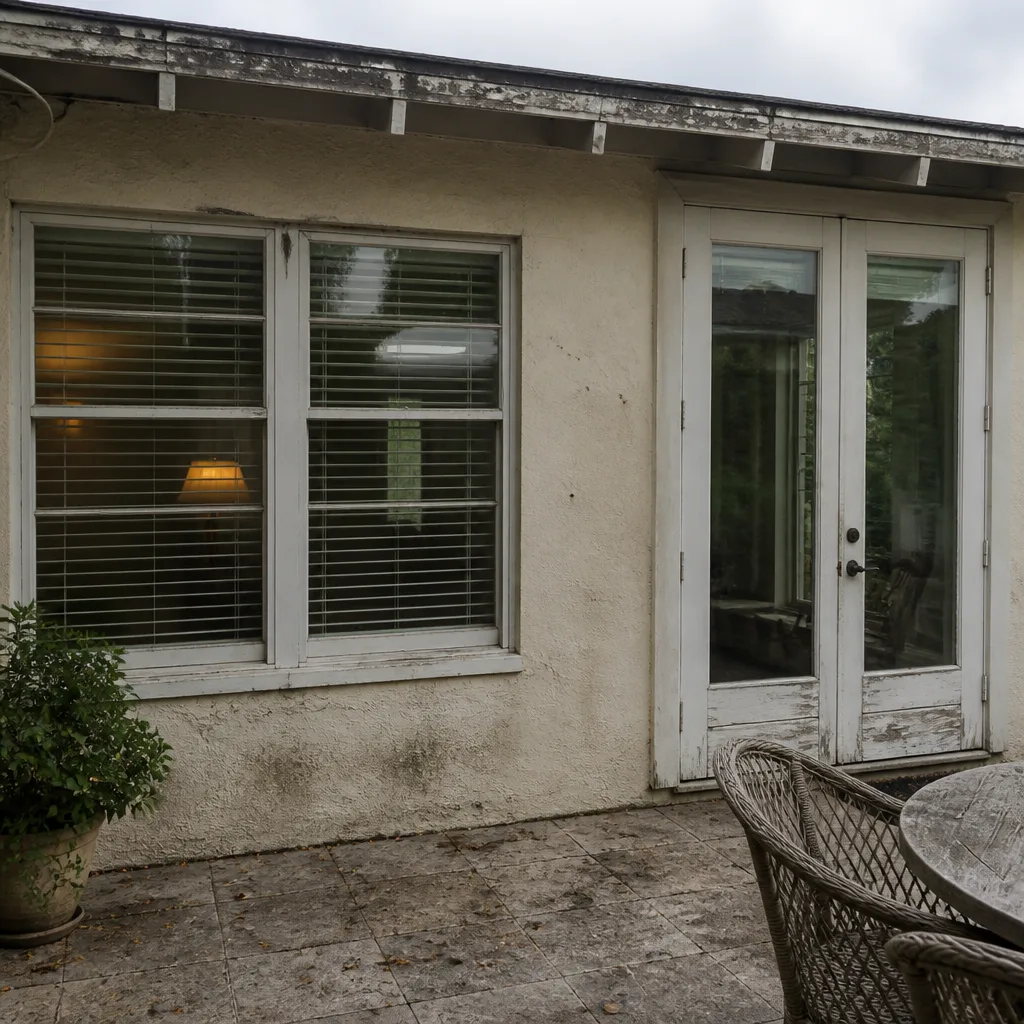 Before
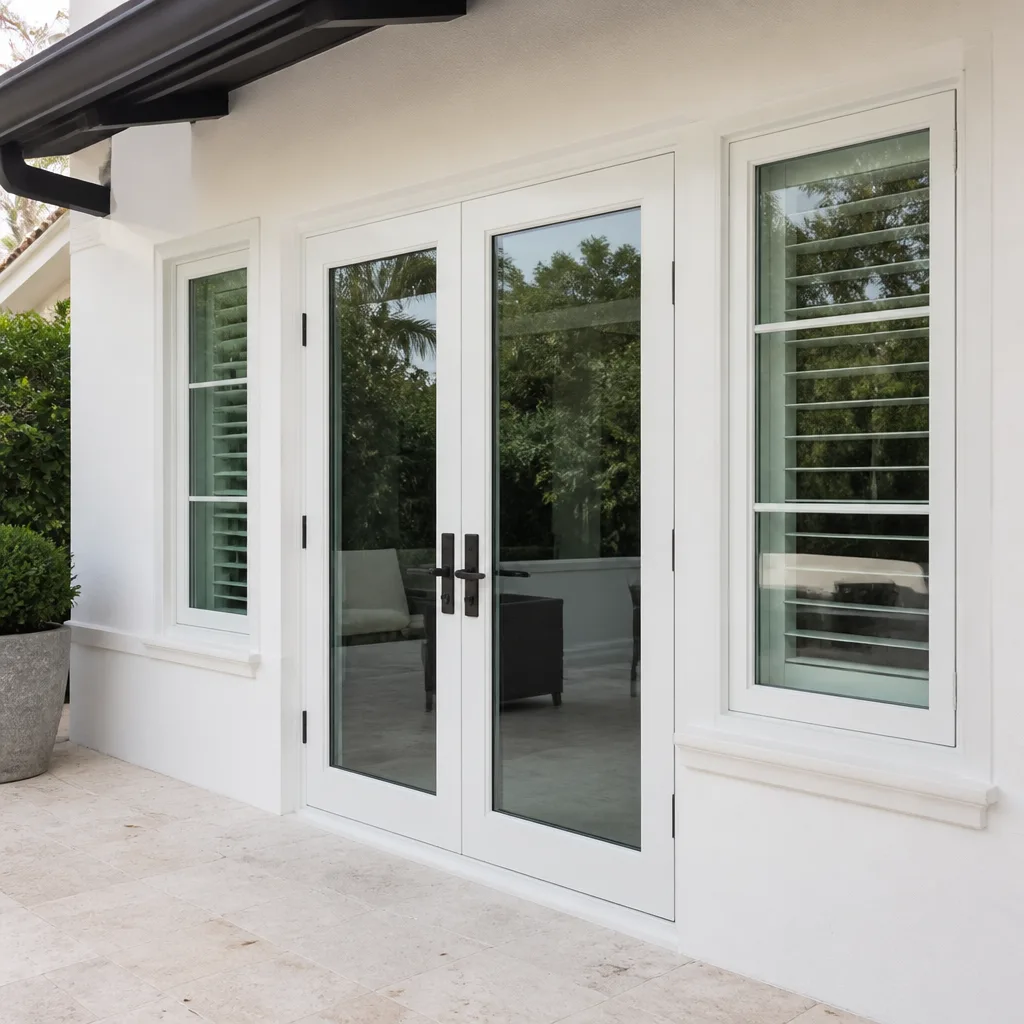 After
After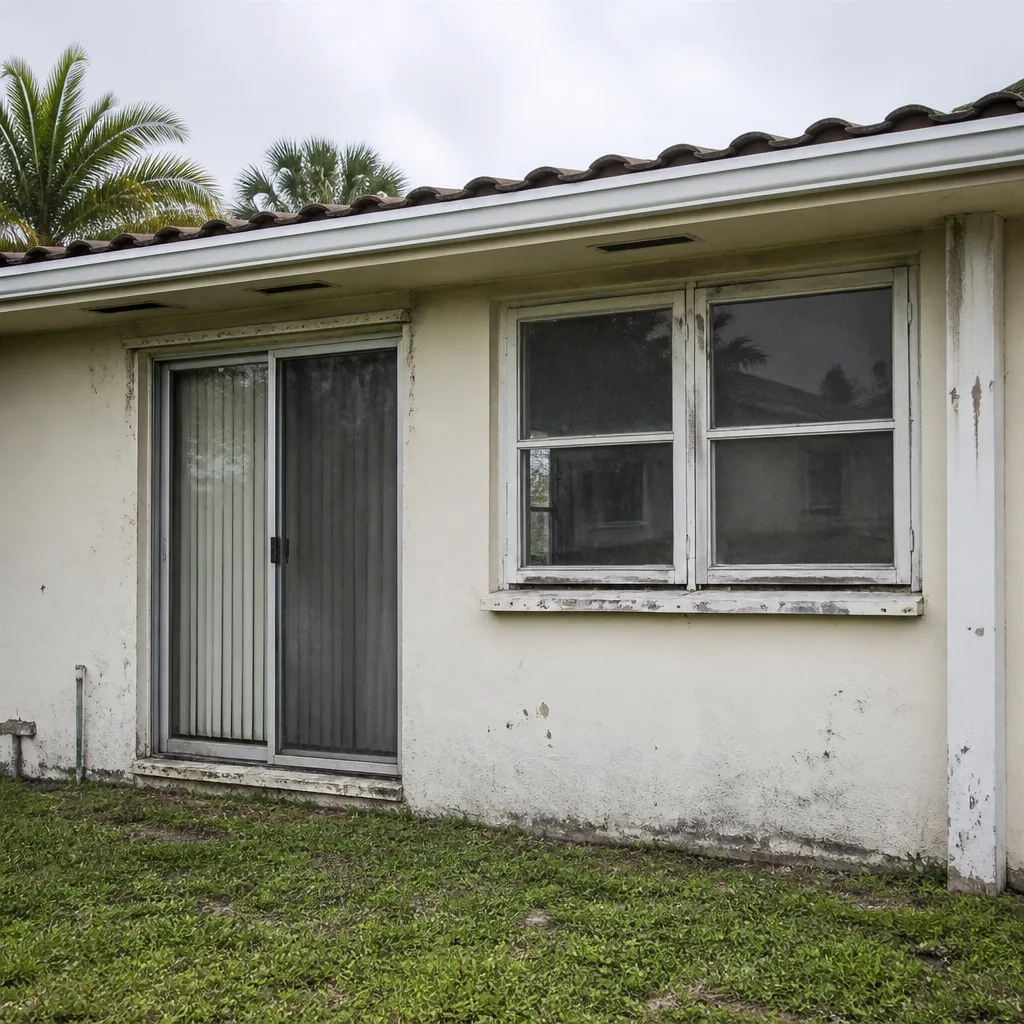 Before
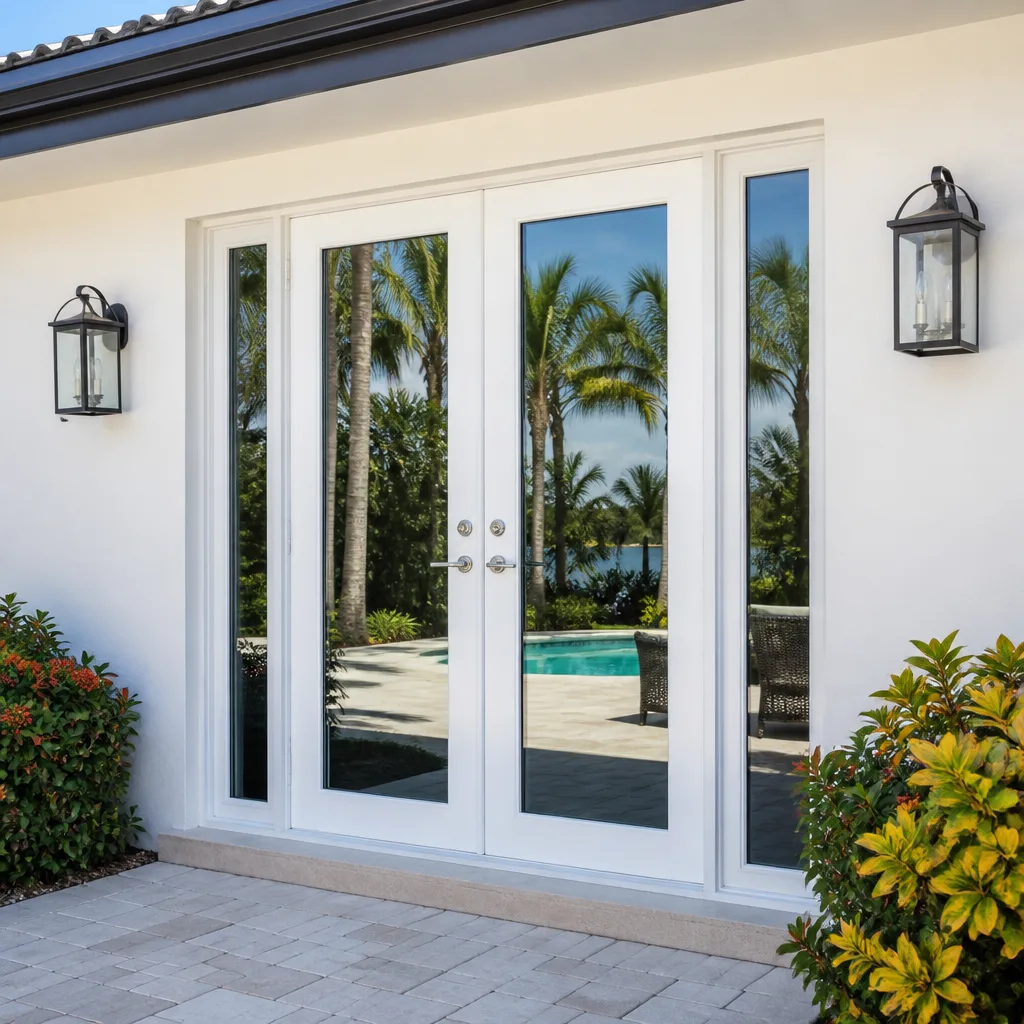 After
After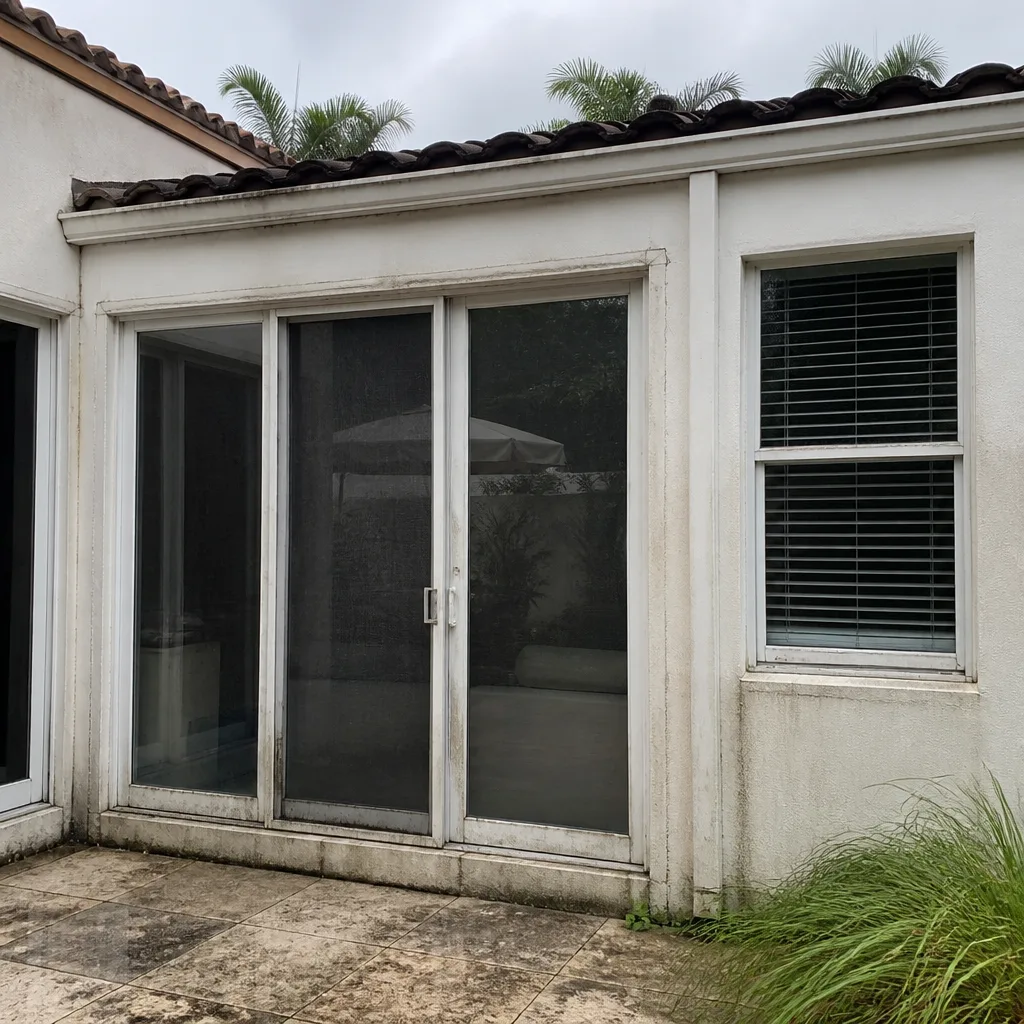 Before
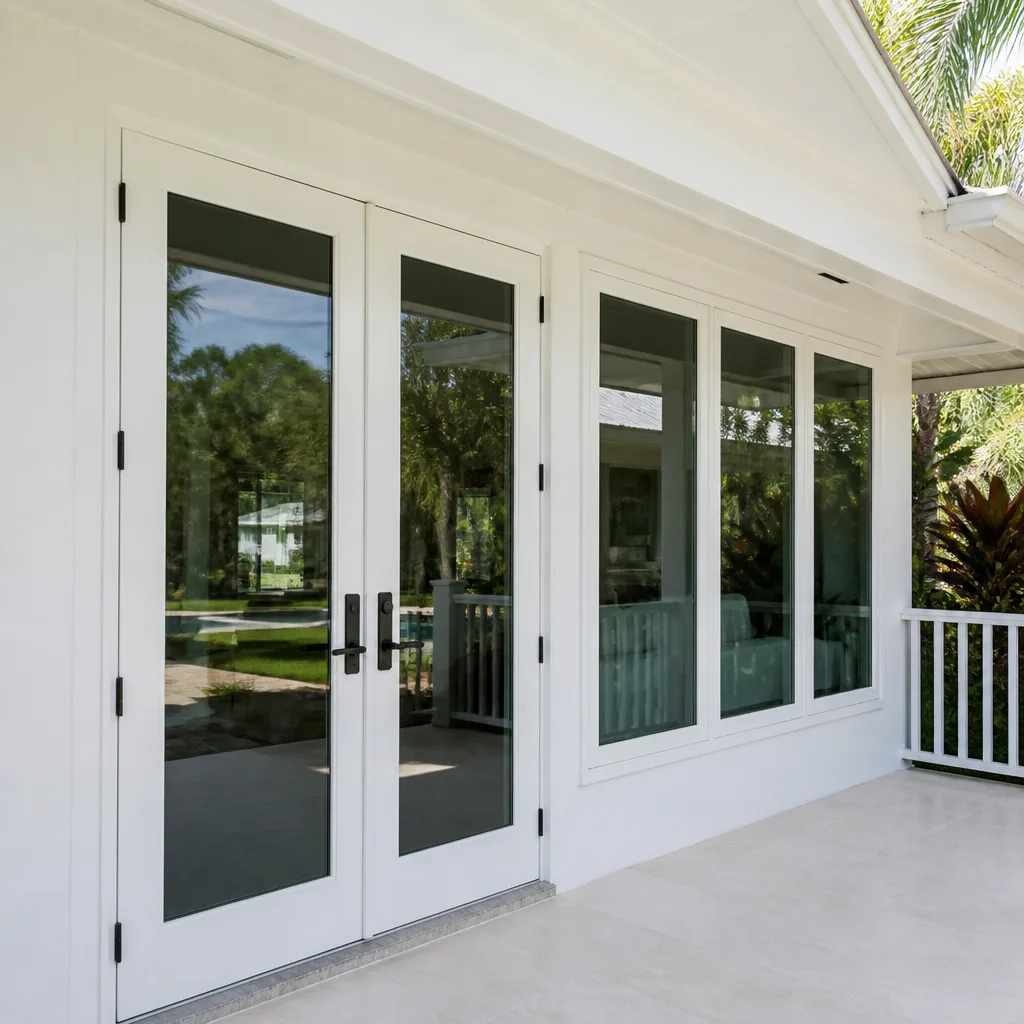 After
AfterWindows & Doors Warning Signs: A Palm Beach Homeowner’s Reference Guide
A hairline crack in the glazing compound of an impact window is almost always invisible from inside the house. But that thin, alligator-skin fracture running along the seal is the single most reliable predictor of a breach during wind loading, and a flashlight at dusk will find it every time. Most Palm Beach homeowners don’t call a contractor until water is on the floor or a door won’t close, but impact windows and exterior doors send legible warning signals weeks or months earlier. This guide teaches you to read those signals yourself, before a $200 repair becomes a $12,000 replacement.
Quick Answer
Window and door failures in Palm Beach announce themselves through condensation patterns, seal cracks, hinge discoloration, and frame movement long before visible water intrusion or binding occurs. A homeowner checking window seals with a flashlight at dusk, testing doors with a two-minute racking measurement, and reading rust progression on hardware can catch most failures in a $200 to $800 repair window rather than a full replacement. The key is knowing which signals are cosmetic, which are structural, and which ones mean your storm rating is already compromised.
Table of Contents
- The Sunrise Test: Reading Condensation to Spot Seal Failure Before It Fogs
- Door-Frame Racking vs. Seasonal Expansion: The Two-Minute Check
- Staining Patterns: Salt Shadowing vs. Capillary Water Intrusion
- Hardware in a Salt Environment: The Rust Progression Timeline
- When a Sticky Impact Door Is a Comfort Issue vs. a Storm-Rating Issue
- Glazing Compound and Seal Cracks: The Dusk Flashlight Method
- Frame Movement and Fastener Pull-Out: What the Gaps Tell You
- Common Mistakes to Avoid
- When to Call a Professional
- Frequently Asked Questions
- The Bottom Line
The Sunrise Test: Reading Condensation to Spot Seal Failure Before It Fogs
An insulated glass unit (IGU) fails from the edge inward. The desiccant inside the spacer bar absorbs moisture until it saturates, and then the fog becomes permanent. But before that point, the unit sends a clear signal: condensation that appears on the inside surface of the glass, between the panes, only during the first hour after sunrise. Here’s how to run the test.
- Pick a morning when overnight temperatures dropped below 70 degrees. In Palm Beach, that’s most of late fall through early spring, but even summer mornings work if the bedroom has been air-conditioned all night.
- Check east-facing windows first, between 7:00 and 8:30 a.m. The morning sun hits the glass before the interior temperature rises, which is when a marginal seal shows itself.
- Look for condensation that is between the panes, not on them. Wipe the outside surface with your thumb. Wipe the inside surface. If the moisture doesn’t wipe away, it’s inside the IGU, and the seal is already failing.
- Track which windows fog and which stay clear. A single fogging unit among otherwise clear windows on the same wall eliminates humidity as the cause. If every window fogs inside the glass, the IGUs were likely from the same production run and the whole order is suspect.
In our experience across Palm Beach, early-stage seal failure is the most overlooked issue we find during window replacement consultations. Homeowners call about fog that never goes away, but by that point the insulating gas has escaped, the U-value is shot, and the only fix is replacement. The sunrise test catches it in the phase where the glass itself is still good, but the unit is on borrowed time. For impact-rated windows, a failed seal also means the lamination bond is the only thing holding the unit together under storm pressure, and that’s a risk you don’t want to take into hurricane season. If you’re checking impact windows specifically, our guide to Impact Windows in Palm Beach walks through what a healthy impact assembly should look like.
Door-Frame Racking vs. Seasonal Expansion: The Two-Minute Check
Every door in Palm Beach moves with the seasons. Wood frames absorb humidity in summer and shrink in the dry winter months, so a door that rubs the jamb in September but closes cleanly in January is probably just Florida doing what Florida does. Racking is different. Racking means the frame itself is out of square, and it doesn’t fix itself when the humidity drops. Here’s the check that takes two minutes and tells you which problem you have.
- Measure diagonally across the face of the door opening. Run a tape measure from the top left corner of the frame to the bottom right corner. Then top right to bottom left. On a square frame, the two measurements are within 1/8 inch of each other.
- Compare the numbers. A difference between 1/4 and 1/2 inch is seasonal movement or minor settling. A difference over 1/2 inch means the frame is racking, and no amount of hinge adjustment will fix it for more than a few weeks.
- Test the same door at the same time of day. Late afternoon heat expands the slab and the frame. If the door binds at 4 p.m. but operates smoothly at 8 a.m., expansion is doing the work. If it binds all day, every day, something structural is moving.
- Watch the reveal, the gap between the slab and the jamb. A healthy door shows an even 1/8 to 3/16 inch gap on all three sides. If the gap pinches at the top hinge corner and widens at the bottom latch corner, the weight of the slab is pulling the top hinge out of the jamb, and that’s fastener pull-out, not expansion.
Racking matters more in Palm Beach than in most markets because so many of our exterior doors are heavy impact-rated slabs. A Therma-Tru impact door can weigh over 150 pounds. That weight, hung on a frame that’s slowly migrating out of square, accelerates hinge wear and can twist the panel enough that the multi-point lock stops engaging cleanly. When the lock doesn’t fully seat, the door isn’t just drafty; it’s no longer delivering the wind-load rating you’re paying for on your insurance policy. We’ve seen racking go from a 1/2-inch measurement to a door that won’t latch at all in under a year, and at that point the frame has to come out. Catch it at a 1/2 inch, and it’s usually a re-shim and a re-fastener job on the existing frame. A window installation company that also does doors can tell you in one visit whether your frame is seasonal or structural.
Staining Patterns: Salt Shadowing vs. Capillary Water Intrusion
In a coastal town like Palm Beach, every white frame shows discoloration eventually. The question isn’t whether there’s staining; it’s whether the staining is on the surface or moving through the assembly. Here’s how to tell the difference without pulling the trim.
- Salt shadowing follows the prevailing wind and sits on the surface like a watermark. It’s uniform, it’s on the windward face only, and it washes off with soap and water. Salt shadowing is cosmetic. It means you live near the ocean, not that your window is failing.
- Capillary water intrusion leaves a different signature. You’ll see it as a dark, wedge-shaped stain starting at a specific point, usually a miter joint, a screw head, or the seam where the frame meets the stucco. The stain narrows as it moves away from the entry point, which tells you gravity and capillary action are pulling water into the opening.
- Yellowish or amber staining at a frame corner, especially on the interior side, means water has been pooling inside the frame channel and leaching through the finish. By the time interior staining appears, the water has been working on the frame for months.
- White, chalky residue on an aluminum frame is surface oxidation. On a vinyl frame, chalkiness is UV degradation. Both are cosmetic until you see cracking or flaking, at which point the weather barrier is gone and the material underneath is exposed.
The important distinction is this: surface staining is a maintenance issue, but capillary intrusion is a replacement driver. Water wicking into a frame joint rots wood jambs, corrodes steel fasteners, and saturates the insulation in the wall cavity. In a coastal climate with Palm Beach’s humidity and salt load, that moisture rarely dries out on its own. If you’re not sure which stain you have, mark the boundary of the stain with a pencil and check it after the next heavy rain. If the stain grows beyond the pencil line, water is actively moving through the assembly. If it stays put, it’s surface residue and a cleaning issue. Either way, a written second opinion on an existing estimate is free from us, and it beats guessing wrong on a frame that’s already giving you warning signs. For a look at what properly installed, properly flashed impact assemblies should look like, see our guide on Impact Windows in Palm Beach.
Hardware in a Salt Environment: The Rust Progression Timeline
Palm Beach’s salt air doesn’t rust hardware overnight; it rusts it in stages, and each stage has a rough timeline. Knowing where your hinges, handles, and fasteners sit on that timeline tells you whether you’re looking at a cosmetic wipe-down or a hardware replacement before the fastener head shears off.
Stage one: surface oxidation (6 to 18 months). A faint orange or rust-colored bloom appears on screw heads, hinge pins, and the underside of handles. This is cosmetic. A wire brush and a dab of corrosion inhibitor stop it in its tracks. Most homeowners ignore it, which is why most hardware moves to stage two.
Stage two: pitting (18 to 36 months). The rust penetrates the plating, and small pits form. You’ll feel them with a fingernail. At this stage, the hardware still functions, but the protective layer is gone, and the underlying steel is now exposed to salt air continuously. The progression from here accelerates.
Stage three: fastener binding (3 to 5 years). The rust swells inside the threads, and screws start to seize. This is the stage where a simple hardware swap becomes a chore, because the fasteners snap when you try to back them out. If a hinge screw head is rusted enough that the Phillips slot is rounded, plan to drill it out rather than turn it.
Stage four: fastener failure (5+ years). The screw shanks have thinned to the point where they shear under load. On an impact door, the first sign is usually a hinge that pulls away from the jamb with a quarter inch of daylight behind the leaf. On windows, it’s a sash that drops on one side because the pivot screw let go.
The fix at stage one costs about ten minutes and a few dollars of inhibitor. The fix at stage four is frame repair. In a salt environment, we recommend checking hardware twice a year, and if you’re within two blocks of the ocean, we’d lean toward stainless or marine-grade hardware when the time comes for window replacement. PGT and CGI both offer stainless hardware packages on their coastal lines, and for doors, Therma-Tru’s coastal hardware options hold up measurably longer than the standard sets.
When a Sticky Impact Door Is a Comfort Issue vs. a Storm-Rating Issue
A door that drags across the threshold is annoying. A door that drags because the frame is out of square or the hinges are pulling out is also a door that no longer meets its storm rating. The distinction matters, and not just for comfort, because your Palm Beach insurance policy likely assumes that every impact-rated opening is still functioning as rated.
Comfort issues show up as increased friction with no change in frame geometry. The door scrapes the threshold, the weatherstrip is compressed hard on one edge, or the slab rubs the jamb, but your diagonal measurements are within 1/4 inch. These are maintenance issues: a hinge adjustment, a threshold shim, a new sweep. They don’t affect the door’s structural integrity, and they cost a few hundred dollars at most to fix.
Storm-rating issues show up when the friction comes with geometry changes. Your diagonal measurements are out more than 1/2 inch, the multi-point lock doesn’t fully seat into the jamb strikes, or the panel visibly sags when the door is open. When any of those conditions exist, the pressure cycle during a hurricane will push and pull the panel against a frame that’s not resisting as a locked, rated assembly. The door isn’t just sticky; it’s a weak point in the envelope.
The insurance angle is what most homeowners miss. Impact-rated assemblies earn their rating as a complete unit: frame, panel, hinges, hardware, and glass, all tested together. Change any one element, by wear or by racking, and the assembly no longer performs to the tested standard. If you’re in the middle of hurricane season and your impact door is binding, the right move is to have someone look at it before the next named storm, not after. The free second opinion on a written estimate applies whether or not we did the original install. And if you’re considering upgrading, impact windows in Palm Beach follow the same logic: the rating lives or dies in the frame and hardware, not just the laminated glass.
Glazing Compound and Seal Cracks: The Dusk Flashlight Method
Impact windows in Palm Beach are built around laminated glass, but the laminated unit still sits in a frame channel sealed with glazing compound or gasketing. When that compound cracks, two things happen. First, water finds its way into the channel and sits against the edge of the glass, which eventually attacks the laminate edge seal. Second, the crack creates a linear weak point where air pressure differentials during storms can start a peel failure in the seal. The crack you see at dusk is the early warning for a performance failure you won’t see until the storm hits.
Here’s how to find them.
- Wait until dusk, then turn off the interior lights. The low-angle, low-intensity light skims across the frame surface rather than washing it out. Cracks catch the light differently than intact compound, and they show up as bright lines with a slight shadow behind them.
- Hold a flashlight at a shallow angle to the frame. Shine it along the glazing line, not straight at it. Hairline cracks that are invisible head-on will appear as distinct breaks in the light reflection.
- Check the corners first. Glazing compound fails at miter points and at the junction between the frame and the glass stop because that’s where thermal expansion concentrates stress. In Palm Beach, the daily thermal cycling between a 90-degree afternoon and a 74-degree air-conditioned interior exerts constant movement at every miter.
- Run a fingernail across any suspect line. If the nail catches, it’s a crack, not a scratch. Scratches are fine. Cracks are not.
Small cracks in glazing compound can often be re-pointed with fresh sealant before the water works its way in. Left alone, they grow, and they don’t grow on a schedule. We’ve seen a hairline at a window corner become a visible gap in a single summer of thermal cycling. Once the gap is open, you’re no longer talking about re-pointing; you’re talking about pulling the sash and re-bedding the glass. For homeowners considering window installation in Palm Beach, this is exactly the kind of pre-existing frame damage that should be addressed at the time of install, not papered over.
Frame Movement and Fastener Pull-Out: What the Gaps Tell You
Windows and doors in Palm Beach don’t sit still. Frames expand and contract with temperature, stucco moves with moisture, and the whole assembly flexes under wind load. Most of this movement is normal and absorbed by the installation. The warning signs show up when movement exceeds the design tolerance, and you can read them in the gaps.
- Caulk separation at the frame-to-stucco junction, longer than a few inches and wider than a hairline, indicates the frame is moving independently of the wall. Small, evenly distributed caulk cracks are seasonal. Long, single-plane separations mean the frame is racking or the fasteners are losing grip.
- Daylight visible around the frame is a non-negotiable fail. A properly installed window or door in Palm Beach shows no light gaps at any point around the perimeter. Daylight means the weather seal is gone at that point, and water will follow the same path the light takes.
- Fascia or trim pulling away from the frame, especially at the corners, often indicates water has already soaked the wood behind and caused it to swell. The visible gap is the last symptom, not the first.
- Fastener heads sitting proud of the frame surface, where they used to sit flush, means the fastener is backing out. The hole has wallowed, and the screw no longer bites. On a hinge-bearing frame, this is stage three rust in action.
- Inside the house, drywall cracking at the corners of window and door openings, in a diagonal line from the corner outward, is a red flag. That’s tension from frame or header movement transferring into the interior finish. Some settling is normal in the first few years, but diagonal cracks that appear or grow on an established structure deserve a look.
Each of these signs points to the same underlying issue: something is moving that shouldn’t be, and the fastening system is no longer holding it in place. The longer the movement continues, the more the opening wallows out, and the bigger the repair gets. In Palm Beach’s wood-frame construction, a little movement ignored for a few years becomes a rotted king stud and a much larger project. The good news is that most framing repairs, caught early, are far less expensive than homeowners expect. It’s only the deferred ones that turn into five-figure rebuilds.
Common Mistakes to Avoid
- Ignoring morning condensation because it “burns off” by 10 a.m. Condensation between the panes that clears as the day warms is still seal failure. It’s easier to live with than permanent fog, but it’s the same diagnosis, and the clock is already running on the unit’s insulating performance.
- Lubricating a binding door instead of measuring the frame. Spray lubricant makes a racking door quiet for a few days, but it does nothing for the out-of-square frame. The friction is the symptom; the geometry is the disease. Measure before you lube.
- Assuming every stain on a coastal frame is “just salt.” Salt shadowing is real, and it’s common within a few blocks of the ocean. But a wedge-shaped stain that starts at a joint is water intrusion until proven otherwise. Pencil-mark it, watch it, and act if it grows.
- Painting over rusted hardware instead of replacing it. Paint hides the rust and traps the salt. The fastener keeps corroding underneath, and the first you’ll know of it is when the screw head snaps. Replace the hardware or treat the corrosion properly before finishing.
- Replacing glass in a failure-prone frame. If the frame has racked, the fasteners have pulled, or the miter joints have opened, putting new glass in the old frame buys a year or two at best. The frame and the glass are a system. Fix both or fix neither.
- Waiting for a visible leak before calling a professional. By the time water shows up on the interior wall or floor, the intrusion has been active for months. The stains, cracks, and hardware signs in this guide show up earlier, cost less to fix, and leave you in a much stronger position when you do bring someone in.
- Treating an impact door’s binding as a cosmetic annoyance. On a non-impact interior door, sure. On a rated exterior assembly, a binding or sagging door is a storm-performance issue, and your insurance carrier cares about storm performance. Fix the frame, keep the rating.
When to Call a Professional
You’ve found a failed seal that fogs before noon, a door frame that measures out of square by half an inch or more, or a wedge-shaped stain that grows after rain. You’ve got rust pitting on hinge fasteners, caulk separation that wasn’t there six months ago, or a diagonal crack climbing from a window corner. These are all signals that your window or door has moved past the DIY inspection phase and into the fix-it phase, and the fix usually involves pulling the frame, re-bedding the glass, or re-anchoring the assembly into sound framing. That’s not a Saturday project, and in a wind-rated coastal home, it’s not one you want to learn on. Winslow Windows & Doors offers free estimates in Palm Beach and the surrounding county. Call (561) 782-7525, and Ed will tell you straight what you’re dealing with. If you already have a written estimate from another company, bring it in; the second opinion is free.
Frequently Asked Questions
Replacing a failed insulated glass unit in Palm Beach typically runs $200 to $600 per window depending on size, glass type, and whether the sash can be re-glazed in place or needs to come out. Impact-rated IGUs run higher, usually $500 to $900 per unit, because the laminated glass and the replacement process are more involved. Call (561) 782-7525 for an exact quote on your windows, estimates are free.
In most cases, yes. If the slab itself is still straight and the hinges haven’t wallowed out the jamb, a racked frame can be re-shimmed, re-fastened, and brought back to square in a few hours. The door stays. If the frame has been racking for years and the jamb wood is rotted or split, the frame comes out and a new pre-hung unit goes in. The measurement check in this guide tells you which situation you’re facing.
Morning condensation between the panes of a double-pane or impact window means the seal on the insulated glass unit has failed and moisture is getting into the space between the glass. The moisture appears in the morning because the temperature differential between the inside and outside surfaces is greatest at that hour. Once a seal fails, the insulating gas escapes and the unit’s energy performance drops permanently.
We recommend a full inspection twice a year: once in late spring before hurricane season and once in early fall after the worst of the heat and humidity. The spring inspection focuses on storm-readiness, seal integrity, and hardware function. The fall inspection catches thermal-cycle damage, caulk separations, and rust progression before the cooler months hide them from view.
It can. Your insurance policy assumes the impact-rated openings in your home are performing as rated. If the door frame is out of square, the multi-point lock isn’t seating, or the hinges are pulling, the door is not delivering its tested wind-load performance. After a storm, that can affect a claim. Fixing a binding impact door before hurricane season is an investment in your policy’s validity, not just your comfort.
For coastal Palm Beach homes, PGT and CGI both offer impact-rated lines with stainless hardware options and finishes that stand up to salt exposure better than standard configurations. For doors, Therma-Tru both manufacture impact-rated slabs that perform well in marine environments. The right brand depends on your specific exposure, budget, and the existing frame conditions. Call (561) 782-7525 and we’ll give you a straight recommendation for your home.
The Bottom Line
Windows and doors don’t fail silently in Palm Beach. They telegraph every developing problem through condensation, staining, rust, and geometry changes, and any homeowner with a flashlight, a tape measure, and ten minutes can read the most important warning signs. Caught at the seal-crack stage, most issues cost a few hundred dollars. Deferred to the water-on-the-floor stage, they become five-figure replacements. The best defense is a seasonal habit: check the glass at sunrise, measure the door frames, mark the stains, and watch the hardware. When something moves past the maintenance stage, get a local professional who carries Winslow Windows & Doors home level accountability, not a ticket number. Ed’s name is on the door, and on every job we do. The one down the road.
Written by Ed Winslow, Owner at Winslow Windows & Doors, serving Palm Beach since 2011.
Six Reasons Homeowners Choose Winslow Windows & Doors
Impact systems engineered to design pressures up to +/-100, matched to your wind zone - your openings hold when the storm arrives.
Low-E insulated impact glass from our manufacturer lines commonly cuts monthly cooling bills 20-30%.
Laminated impact glass shuts out up to 40% of outside noise - traffic, neighbors, weather.
Monitoring services run $30-90 a month. Laminated impact glass resists forced entry around the clock, with no subscription.
Florida homeowners average around 25% savings on the windstorm portion of their policy after protecting every opening - some homes qualify for more.
A full impact package upgrades curb appeal, buyer confidence and appraised value in one project.